
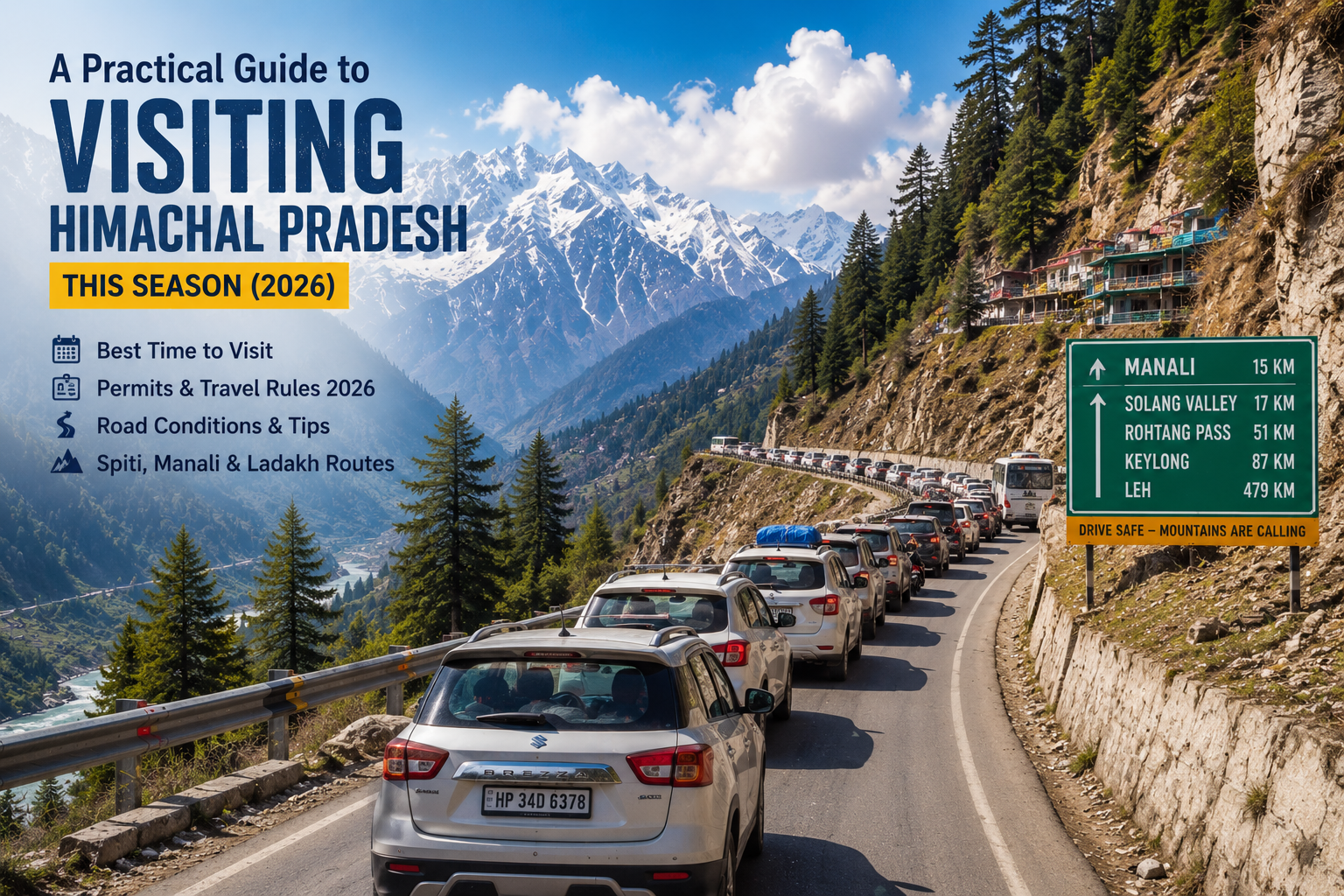
Tourist arrivals in Himachal Pradesh have been climbing steadily, and 2026 is shaping up to be one of the busiest seasons the state has seen. The mountains have not changed. But the experience of visiting them has. Permits sell out days in advance. Popular roads close without warning. Hill stations that once felt quiet now fill up on weekends faster than most people expect. Whether you are exploring Himachal travel packages for the first time or returning after years, the difference between a great trip and a frustrating one comes down to one thing: how well you prepared before you left. This guide gives you exactly that.
Choosing Your Season To Visit Himachal Wisely
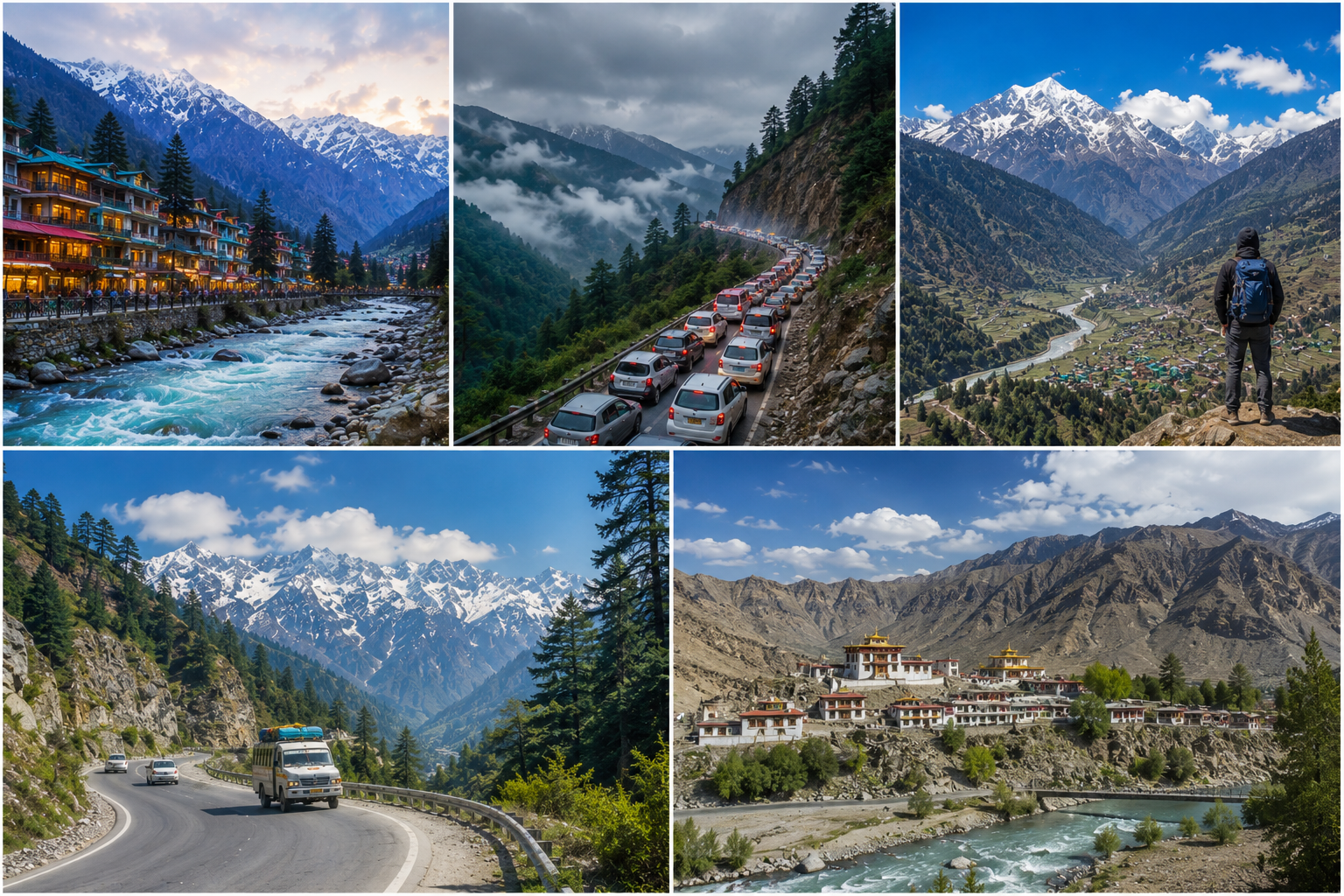
- April to June is the classic window for Himachal travel packages and family holidays. Temperatures sit between 15–25°C while the plains push past 40°C. Shimla, Manali, Dharamshala, Dalhousie, and Bir Billing are all accessible. Rohtang Pass opened on May 17 this year. However, Manali on a June weekend means hours of entry-point gridlock, travelling mid-week and booking hotels 4–6 weeks ahead makes a genuine difference.
- October is the month experienced travellers choose. Post-monsoon clarity delivers the sharpest mountain views of the year, all roads are open, and accommodation prices ease. The Kullu Dussehra festival (October 22–28, 2026) fills the valley with a procession of local deities that has no parallel anywhere in the hills. Book early if you plan to be in Kullu that week.
- July to September in Spiti and Lahaul is where most travel guides get it wrong. Lower Himachal during the monsoon is genuinely risky. The 2025 monsoon damaged over 300 roads, and one traveller took 52 hours to reach Manali from Delhi. But Spiti Valley sits in a rain shadow and receives under 200mm of annual rainfall. July–August in Spiti is dry, warm, accessible, and significantly less crowded than peak summer. If the cold desert is your goal, this is the right window for your Himachal travel package.
- December to February suits snow seekers. Solang Valley and Narkanda are reliable for winter sports. Shimla, at 2,200 metres, is no longer a guaranteed snow destination, recent winters have been unpredictable at that altitude. For reliable snowfall, go above 2,700 metres.
2026 Rules: What You Must Sort Before Leaving Home
The Himachal Pradesh government updated its tourism regulations this year. Arriving uninformed causes real disruption.
- From April 1, 2026, all non-HP vehicles pay a Rs 100/day state entry toll. The receipt is valid 24 hours statewide. You pay once, not at every district boundary.
- The Rohtang Pass permit now costs Rs 550 (Rs 500 + Rs 50 congestion fee). Only 1,400 vehicles are permitted daily. During May–June, both daily permit batches sell out within minutes. Book at rohtangpermits.hp.gov.in in advance and verify your PUC certificate is valid, an expired PUC blocks your booking automatically.
- e-Aagman registration (eaagman.hp.gov.in) is mandatory for Lahaul-Spiti before departure. If you use the Atal Tunnel rather than crossing Rohtang, you still need e-Aagman but not the Rohtang permit.
- On arrival in Manali, budget Rs 200–600 in total entry costs: state toll plus Manali green tax.
- Single-use plastic is strictly banned across the state.
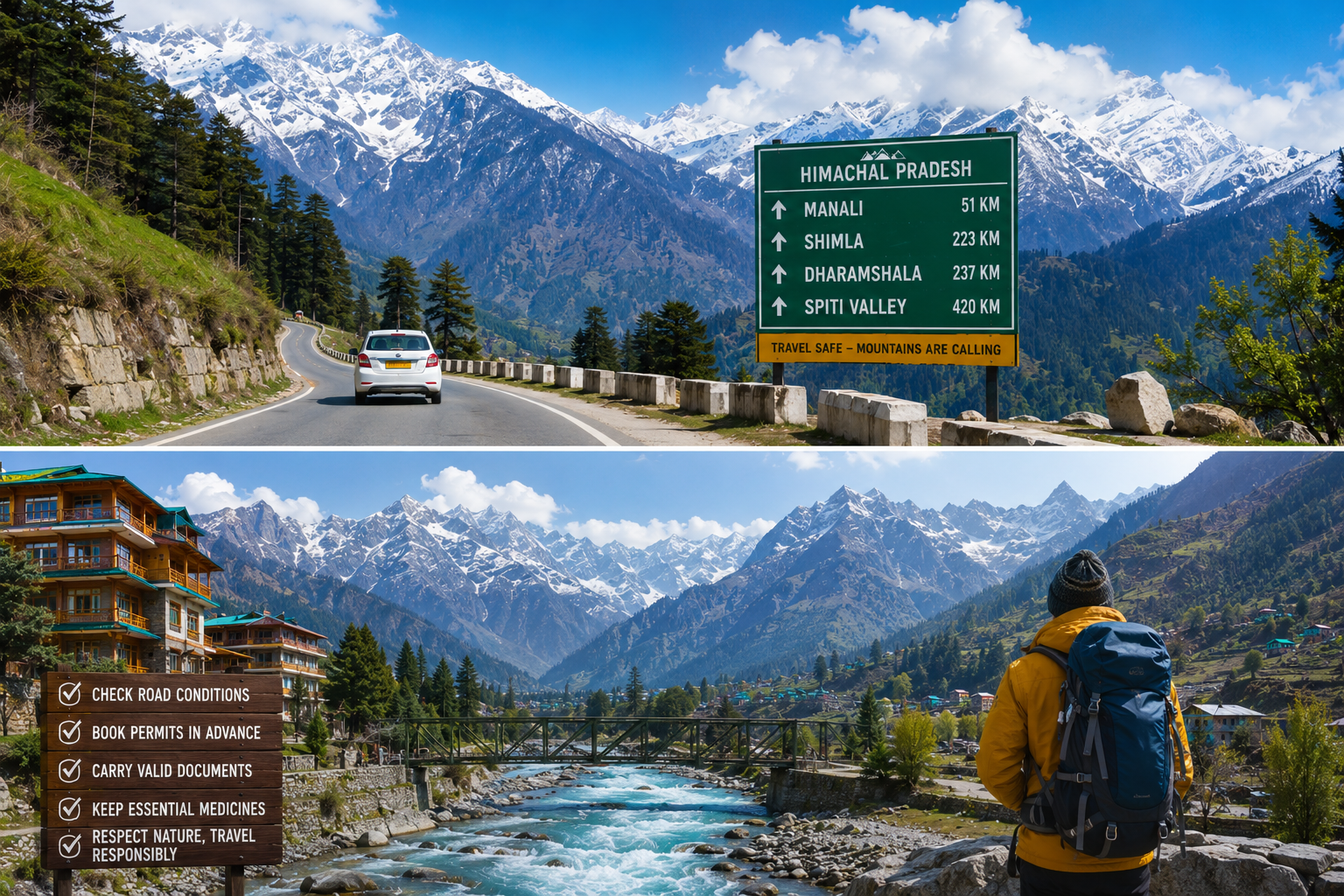
7 Tips Worth Noting Before You Go
- Check road conditions before every driving day. Mountain roads in Himachal close without notice due to landslides, snowfall, or maintenance. The HP Road Information portal and BRO updates are reliable daily sources. Never assume a route is open just because it was clear the day before.
- Book permits and accommodation together. Rohtang Pass permits and hotel rooms in Shimla and Manali fill up simultaneously during May and June. Sorting one without the other is a common planning mistake that leaves travellers either with a room and no pass access, or a permit and nowhere to stay.
- Use HRTC buses for short routes between towns. Himachal Road Transport Corporation buses connect most major towns reliably and cheaply. For routes like Shimla to Manali or Manali to Dharamshala, they are a practical option for solo travellers and budget trips. For families or remote routes, a hired cab with a local driver is worth every rupee.
- Carry a basic medical kit and altitude medication. For destinations above 3,000 metres, pack Diamox, a painkiller, ORS sachets, and a basic first aid kit. Medical facilities are limited beyond the main towns. Starting hydration early, well before you feel any symptoms, is the single most effective thing you can do at altitude.
- Keep your documents accessible, not just saved. Printed copies of your vehicle RC, PUC certificate, hotel confirmations, and permit bookings are regularly asked for at checkpoints, especially on the Rohtang and Spiti routes. Digital copies on a phone are useful but not always accepted, and signal drops exactly when you need them most.
Himachal Into Leh Ladakh: How They Connect
Many travellers use Himachal as a natural entry into a Leh Ladakh extension. The best time to visit Leh Ladakh is June through September, when both the Manali–Leh and Srinagar–Leh highways are fully open and daytime temperatures sit between 15–25°C. The Manali–Leh Highway opened in the third week of May 2026. For first-time visitors, the Srinagar route is recommended. The altitude gain is more gradual, which meaningfully reduces the risk of mountain sickness.
A logical combined route: enter through Shimla, travel the Spiti circuit via Kaza and Nako, cross into Ladakh on the Manali–Leh axis, and fly back from Leh or loop via Srinagar. Done properly, this is a 12–16 day journey, not one to compress.
Planning a trip to Himachal Pradesh or Leh Ladakh this season?
Royal Rover Holiday builds customised Himachal Pradesh tour packages and Ladakh circuits for families, couples, and groups. Get in touch to put together an itinerary around your dates and travel style.


Best Honeymoon Places in Himachal Pradesh: 10 Romantic Spots Worth the Trip
Quick Answer The best honeymoon places in Himachal Pradesh are Manali, Shimla, Dalhousie, Dharamshala, Kasol, Naggar, Khajjiar, Chail, Palampur and Spiti Valley. Manali suits most
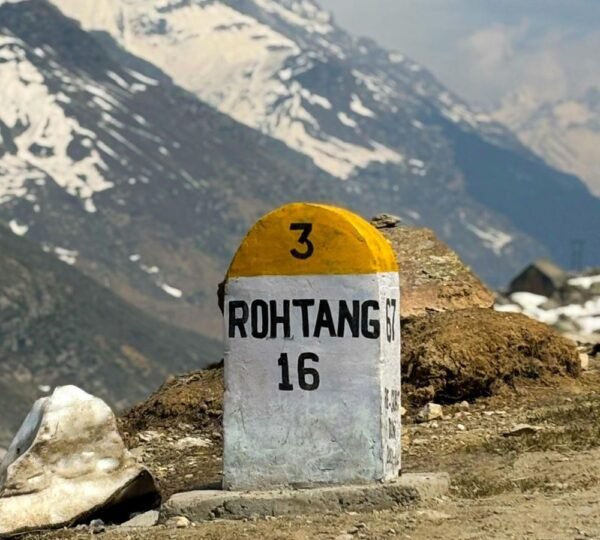
Rohtang Pass or Atal Tunnel – What Your Shimla Manali Package Actually Includes
Quick Answer Rohtang Pass and the Atal Tunnel are two different places and two different days out. Rohtang sits at 3,978 m, needs a Rs
How to Plan a Himachal Pradesh Trip – Best Time, Days Needed, Top Places and What a Full Package Covers
Quick Answer Himachal is not one destination. It is four separate circuits that do not connect neatly, and choosing the wrong combination is how people