
QUICK ANSWER
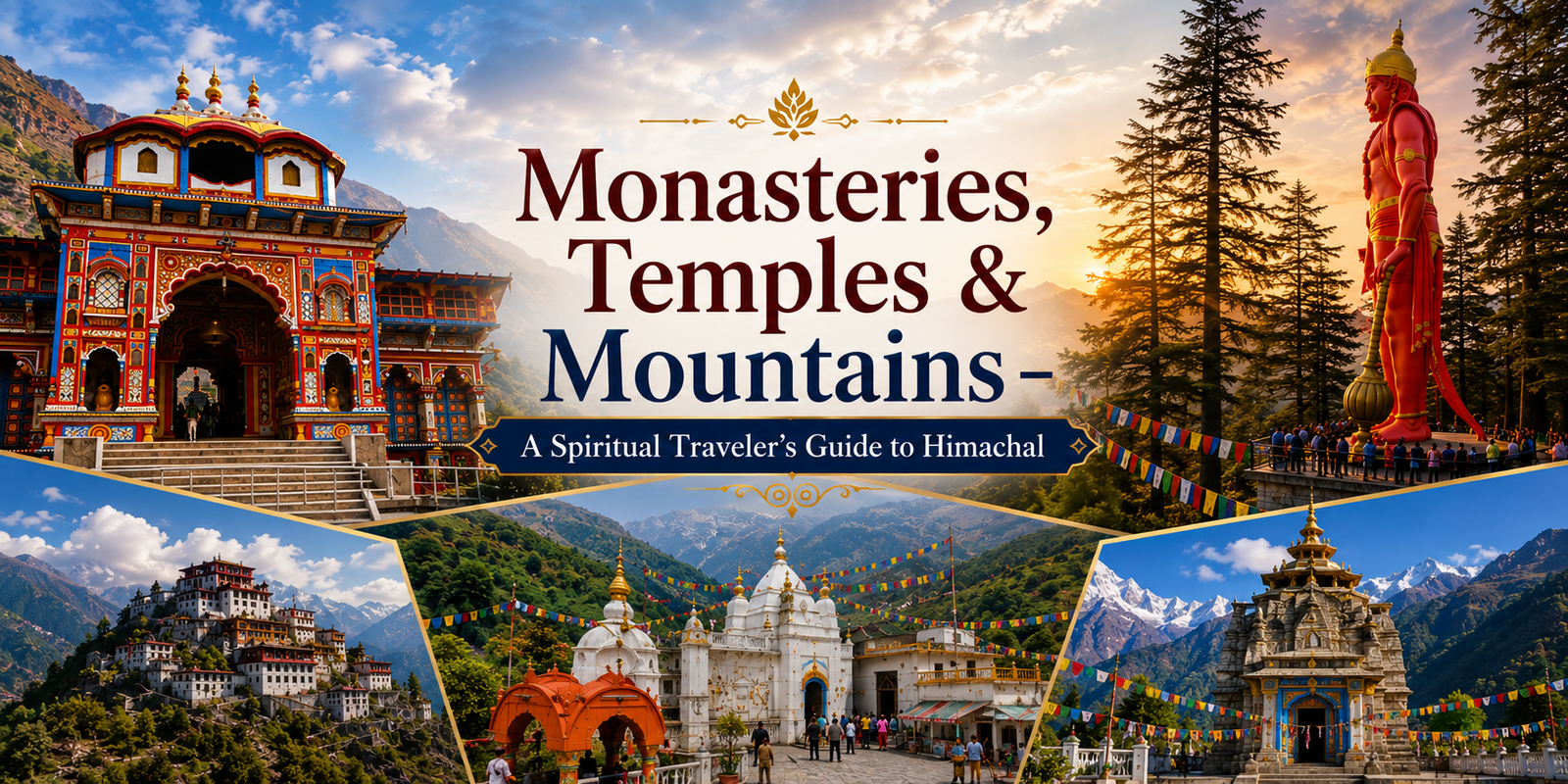
Himachal Pradesh is one of India’s richest spiritual circuits, blending Tibetan Buddhist monasteries (McLeod Ganj, Key, Tabo, Dhankar), ancient Shakti Peethas (Chintpurni, Jwalamukhi, Naina Devi), and sacred sites like the Hidimba Devi Temple and Manikaran Gurudwara. A 7-9 day trip covering Dharamshala-Dalhousie or a dedicated Devi Darshan circuit is enough to experience the region’s temples, monasteries, and mountain serenity without rushing. The best time to go is March to June or September to November, when mountain roads are clear and weather is pleasant.
Why Himachal Pradesh Is India’s Hidden Spiritual Heartland
Most travellers know Himachal Pradesh for its snow-capped peaks and honeymoon-friendly hill stations. Fewer realize it is also home to one of the most layered spiritual landscapes in the country. Tibetan Buddhism arrived here centuries ago and found a permanent home after 1959, when the Dalai Lama established his residence in Dharamshala. Long before that, the region was already dotted with temples dedicated to the Shakti Peethas, ancient shrines believed to mark the spots where parts of the goddess Sati fell to earth. Add to this Sikh gurudwaras, hot-spring shrines, and Hindu pilgrim towns, and you get a state where faith, culture, and geography are inseparable.
What makes a spiritual trip to Himachal different from a typical pilgrimage tour elsewhere in India is the setting. You are not just visiting a temple; you are climbing to a monastery perched on a cliff, or meditating beside a river with 6,000-metre peaks in the background. The mountains themselves become part of the experience.
Tibetan Buddhist Monasteries – Dharamshala to Spiti
McLeod Ganj and the Tsuglagkhang Complex
McLeod Ganj, the upper part of Dharamshala, is often called “Little Lhasa” because of its large Tibetan refugee community. The Tsuglagkhang Complex houses the Dalai Lama’s residence, a temple with a striking Buddha statue, and the Namgyal Monastery, where you can watch monks debate philosophy in the courtyards most afternoons. The Norbulingka Institute nearby preserves Tibetan art, thangka painting, and woodcarving traditions, and is worth half a day even if monasteries aren’t usually your thing.
Spiti Valley’s Ancient Monasteries
If Dharamshala gives you a living, breathing Tibetan community, Spiti Valley gives you history frozen in stone. Key Monastery, perched dramatically on a hilltop at over 4,100 metres, is the largest monastery in Spiti and has survived earthquakes, fires, and invasions since the 11th century. Tabo Monastery, often called the “Ajanta of the Himalayas,” houses centuries-old murals and manuscripts and is one of the oldest continuously operating Buddhist enclaves in India. Dhankar Monastery, balanced precariously on a cliff edge overlooking the confluence of the Spiti and Pin rivers, adds a sense of quiet drama that few other sites in India can match.
A word of practical advice: Spiti is remote and high-altitude. Roads can be rough, and the mobile network is patchy. Give yourself extra buffer days and don’t rush the acclimatisation.
Sacred Temples and Shakti Peethas
Chintpurni, Jwalamukhi, and Naina Devi
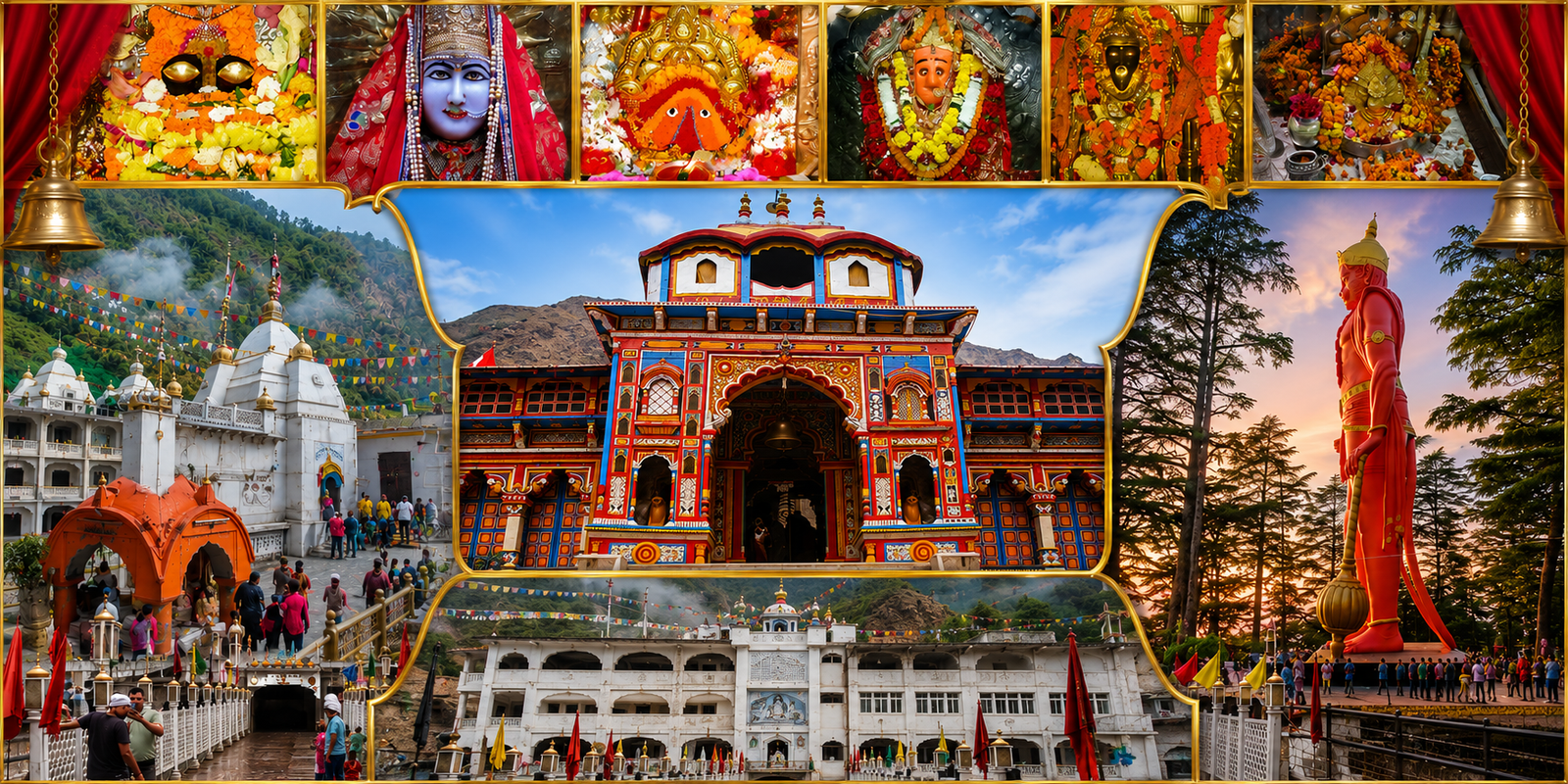
Himachal is home to several of the 51 Shakti Peethas, and many travelers combine two or three in a single trip. Chintpurni Temple, dedicated to Goddess Chinnamastika, draws pilgrims from across North India, especially during Navratri. Jwalamukhi Temple is unique because the goddess is worshipped in the form of an eternal natural flame rather than an idol. Naina Devi, perched above a scenic lake, rounds out a popular circuit often paired with a visit to Chandigarh or Amritsar.
Hidimba Devi Temple, Manali
Set inside a cedar forest in Old Manali, this 16th-century wooden temple dedicated to Hidimba Devi (from the Mahabharata) has an unusual pagoda-style architecture unlike most Himachali temples. Even travelers who come to Manali purely for sightseeing tend to stop here, drawn by the cool, quiet forest setting as much as the temple itself.
Jakhoo Temple, Shimla
Perched on Shimla’s highest hill, Jakhoo Temple is dedicated to Lord Hanuman and features a towering 108-foot statue visible from much of the town. It’s an easy add-on to any Shimla itinerary and offers panoramic views over the Shivalik ranges.
Manikaran Gurudwara and Hot Springs
In the Parvati Valley, Manikaran is sacred to both Hindus and Sikhs. Natural hot springs here are believed to have healing properties, and the Gurudwara serves community meals (langar) cooked using the geothermal heat of the springs — a detail that surprises most first-time visitors.
Planning a Spiritual Circuit – How Many Days Do You Need?
- Weekend Devi Darshan (3-4 days): Chintpurni, Chandigarh, and Dharamshala can be covered in a short 3-night trip, ideal if you’re short on leave.
- Dharamshala-Dalhousie spiritual + scenic combo (5-7 days): Pairs McLeod Ganj’s monasteries with Dalhousie’s churches and colonial charm.
- Deep Spiti monastery circuit (9-10 days): Needed if Key, Tabo, and Dhankar monasteries are your priority, since altitude and road conditions demand a slower pace.
If your time is limited, don’t try to combine Spiti with a Devi Peetha circuit in one trip — they pull you in opposite directions geographically and the pace required for each is very different.
Best Time to Visit for a Spiritual Trip
- March to June: Pleasant weather across Dharamshala, Manali, and the Devi Peethas; ideal for temple circuits.
- July to September: Monsoon makes lower hill roads risky (landslides); Spiti, being in the rain shadow, is actually at its best during these months.
- October to February: Good for Dharamshala and temple towns; Spiti Valley roads typically close due to snow from around November.
Practical Tips for Temple and Monastery Visits
- Dress modestly. Shoulders and knees covered are expected at most temples and monasteries; carrying a light shawl helps.
- Remove footwear before entering temple and monastery interiors — most have designated shoe-racks.
- Photography rules vary. Many monastery interiors (especially in Spiti) restrict photography of murals and statues; always check before you shoot.
- Carry cash for smaller temple towns and monastery donation boxes, since card acceptance is limited outside major towns.
- Acclimatize before Spiti. Spend at least one night in Manali or Kaza before pushing higher to avoid altitude sickness.
- Book a private vehicle for temple-hopping days — public transport between smaller shrine towns is infrequent and can eat up your day.
Final Thoughts
A spiritual trip to Himachal Pradesh isn’t only about ticking off religious sites — it’s about experiencing how deeply faith is woven into the mountains themselves, from a monk debating scripture in a monastery courtyard to a pilgrim lighting a lamp at an eternal flame. Whether you have a long weekend for the Devi Peethas or ten days to go deep into Spiti’s monastery circuit, planning around altitude, road conditions, and the right season will make the difference between a rushed trip and a genuinely moving one.
If you’d rather not plan every temple stop and road transfer yourself, Royal Rover Holiday’s Himachal tour packages — including the dedicated 7 Devi Darshan Tour and Dharamshala-Dalhousie packages — are built around exactly these circuits, with private transport and stays already arranged.
Frequently Asked Questions
Which are the most important monasteries to visit in Himachal Pradesh?
Namgyal Monastery in McLeod Ganj and Key, Tabo, and Dhankar monasteries in Spiti Valley are considered the most significant, covering both living Tibetan Buddhist culture and centuries-old heritage sites.
How many days are needed for a Devi Darshan tour in Himachal?
A focused Devi Darshan circuit covering Chintpurni and nearby shrines can be done in 3-4 days; adding Dharamshala or Jwalamukhi typically extends it to 5-7 days.
Is Spiti Valley safe to visit for religious tourism?
Yes, but it requires planning around altitude and season. Roads are generally accessible from June to early October, and travelers should acclimatize for a day before heading above 3,500 metres.
What is the best time of year for a Himachal temple and monastery tour?
March to June and September to November offer the most reliable weather for temple towns like Dharamshala, Manali, and the Devi Peethas, while Spiti’s monasteries are best visited between June and September.
Rohtang Pass or Atal Tunnel – What Your Shimla Manali Package Actually Includes
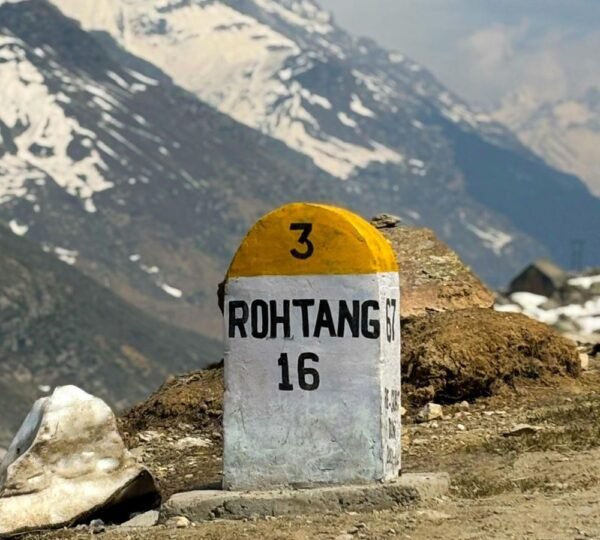
Quick Answer Rohtang Pass and the Atal Tunnel are two different places and two different days out. Rohtang sits at 3,978 m, needs a Rs
How to Plan a Himachal Pradesh Trip – Best Time, Days Needed, Top Places and What a Full Package Covers
Quick Answer Himachal is not one destination. It is four separate circuits that do not connect neatly, and choosing the wrong combination is how people
Hidden Cafes and Local Hangouts – Where Locals Actually Go in Manali & Kasol
Quick Answer Old Manali and Kasol are full of cafes built for Instagram, but the ones locals actually return to are quieter and often unmarked