
Quick Answer
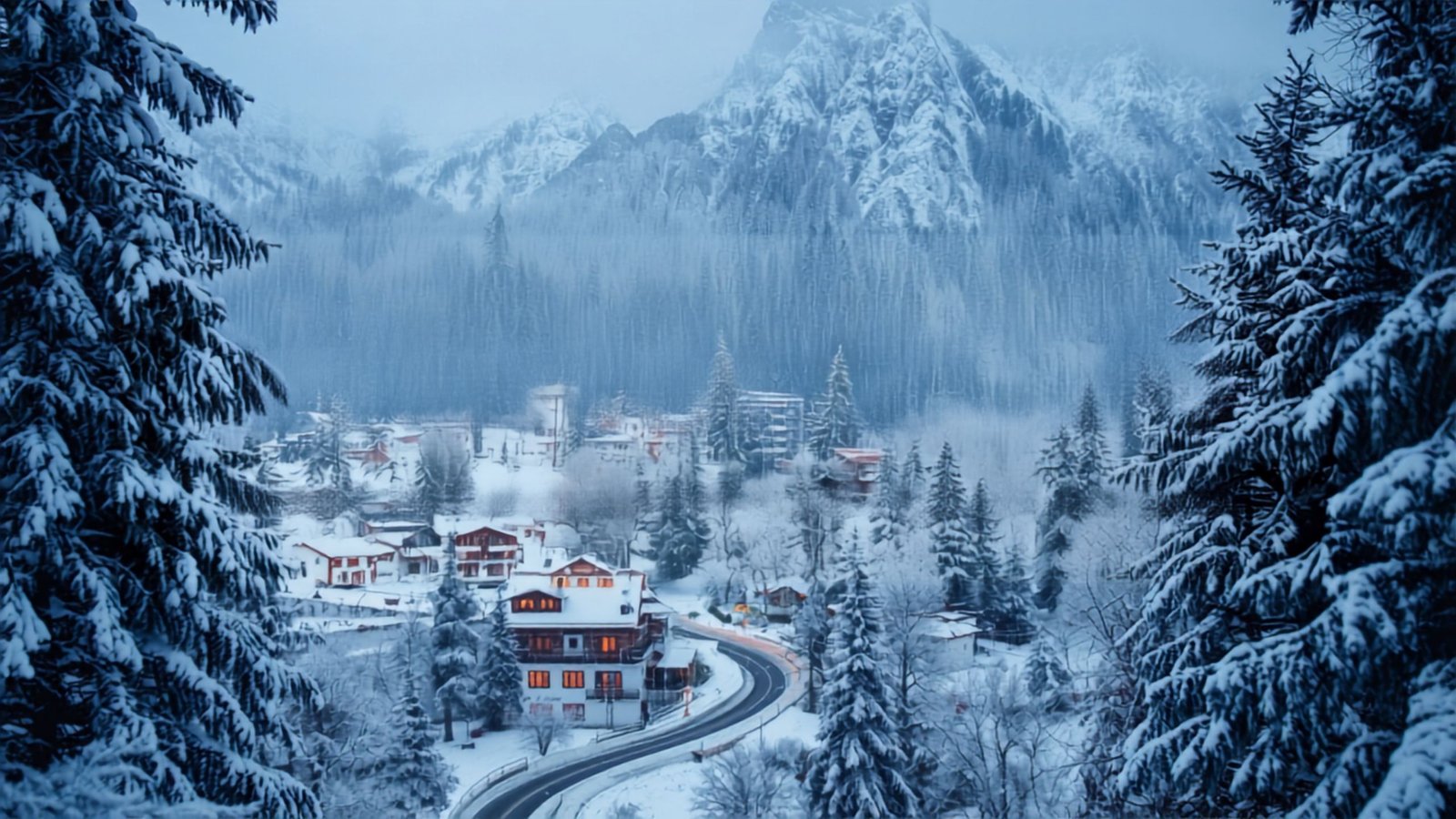
Himachal’s main snow window runs December to February, with January historically the heaviest month – in January 2026 alone, over 1,290 roads across the state closed under heavy snow. Shimla, Manali town, Kufri, Narkanda, Dalhousie, and Dharamshala stay open and accessible through winter (with occasional short closures after heavy snowfall), while Rohtang Pass, the Manali-Leh highway, and Spiti Valley via Kunzum Pass shut down completely from around November through May. If you want guaranteed snow without getting stranded, late December to mid-January in Shimla-Kufri-Narkanda or Manali town is the safest bet.
Why “Which Hill Stations Are Open” Is the Real Question This Winter
Every winter, Himachal draws two very different kinds of travelers: those chasing snow, and those who just want a cold-weather getaway without the chaos. The tricky part is that the same heavy snowfall that makes for postcard-perfect photos is also what shuts down roads, strands tourists, and cancels itineraries with little warning. This isn’t a minor risk — in January 2026, heavy snowfall closed more than 1,290 roads across Himachal Pradesh, and even in April 2026, an unseasonal late snowfall in Lahaul-Spiti blocked over 150 roads and forced authorities to restrict vehicles beyond Solang Nala. Planning a winter Himachal trip means understanding not just where it snows, but where you can actually still get to.
A quick note on timing: this guide is written ahead of the 2026-27 winter season, so we’ve based the patterns below on how the last few winters (2023-24 through early 2026) have actually played out. Exact snowfall dates for any single week are impossible to predict months in advance — for that, you’ll want to check live sources closer to your travel dates, which we cover further down.
Himachal’s Winter Snow Pattern – What Actually Happens
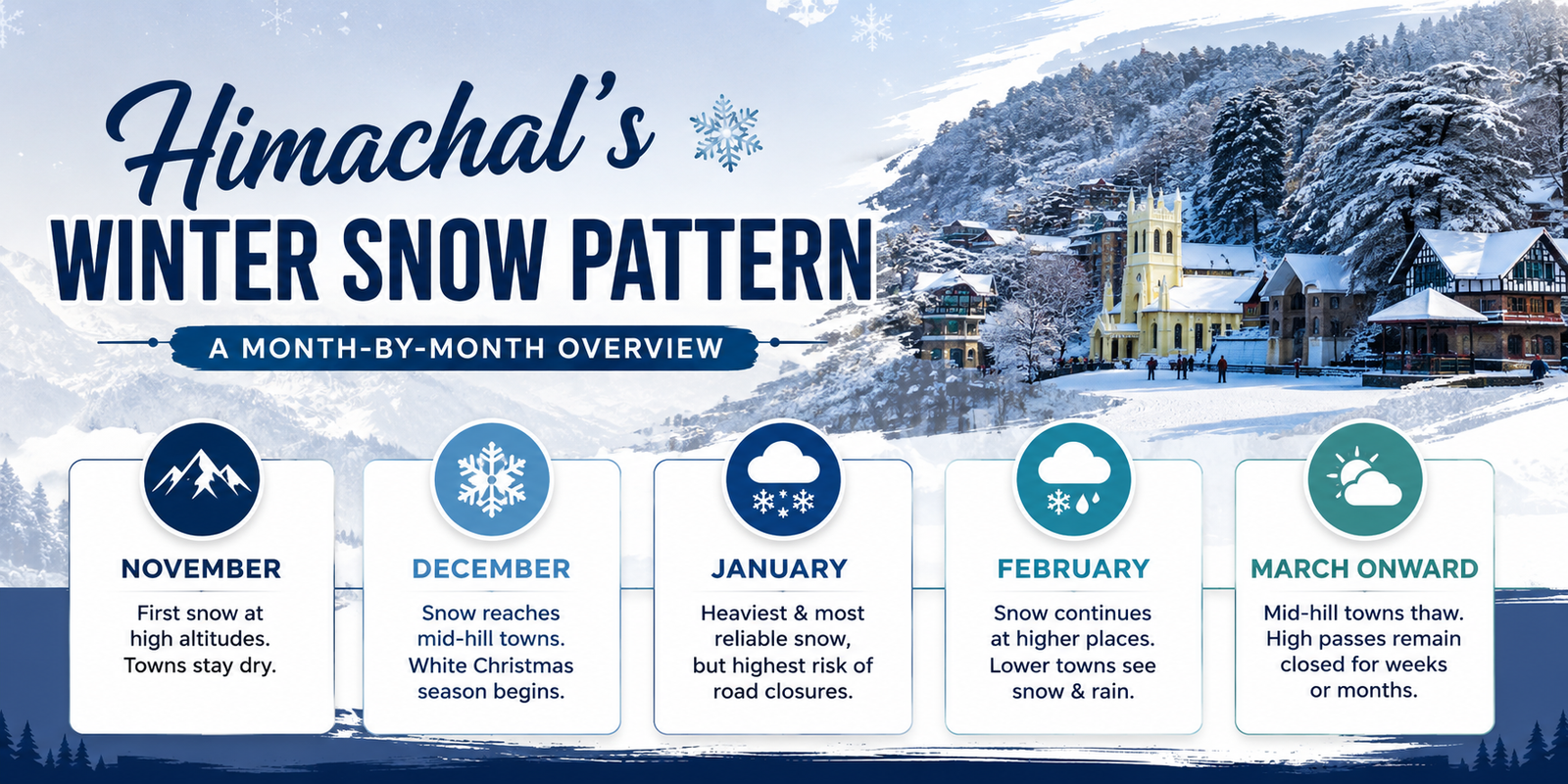
Snowfall in Himachal typically begins at higher altitudes in November, becomes widespread across mid-hill towns by late December, and peaks between mid-January and early February. By March, most lower and mid-altitude areas start thawing, though higher passes can stay snowbound well into May or even June in a heavy-snow year.
- November: First snow at high altitudes (Rohtang, upper Kinnaur, Lahaul-Spiti); Shimla and Manali town remain largely dry.
- December: Snow reaches mid-hill towns — Shimla, Kufri, Narkanda, Manali, Dalhousie. This is when the popular “White Christmas” rush happens.
- January: The heaviest and most reliable snow month historically, but also the month with the highest risk of road closures — January 2026’s 1,290+ road closures are a good example of how disruptive this month can get.
- February: Snow continues at higher elevations; lower towns often start seeing a mix of snow and rain.
- March onward: Mid-hill towns thaw out; higher passes (Rohtang, Kunzum, Jalori) remain closed for weeks or months longer.
Which Hill Stations Stay Open Through Winter
Shimla, Kufri, and Narkanda remain open and are actually at their most popular during snow spells — hotel occupancy in Shimla has been reported to jump over 70% during snowfall weeks in past winters. Roads here get temporarily blocked after heavy snow but are typically cleared within a day or two by the PWD’s snow-clearance teams.
Manali town stays open and accessible year-round by road, even though the areas just above it (Solang Valley in heavy snow, and Rohtang Pass entirely) close. Many winter travelers base themselves in Manali specifically to enjoy snow-covered surroundings without needing to cross a closed pass.
Dalhousie and Khajjiar stay open through winter and see moderate snowfall, with road access generally maintained except during the heaviest storms.
Dharamshala and McLeod Ganj remain open, though the upper reaches around McLeod Ganj can see light-to-moderate snow that occasionally disrupts the last stretch of road for a day.
Which Areas Close or Become Unreliable
Rohtang Pass closes completely, usually by mid-to-late November, and doesn’t reopen until roughly April or May depending on snow clearance progress.
The Manali-Leh Highway closes for the season around the same time as Rohtang, since it depends on multiple high passes (Baralacha La, Tanglang La) that all snow over.
Spiti Valley via Kunzum Pass becomes inaccessible from Manali once the pass closes, typically by early November. The alternate Shimla-Kinnaur route to Spiti (via Sumdo) sometimes stays open slightly longer, but it too becomes unreliable once heavy snow hits Kinnaur, and can close entirely for stretches — as the April 2026 Lahaul-Spiti closures showed, even this route isn’t guaranteed outside peak winter.
Jalori Pass (the route to Jibhi, Shangarh, and the Tirthan Valley) typically closes by December and reopens only after spring snow-clearance, cutting off the most direct road to these offbeat spots for the winter months.
Upper Kinnaur (Chitkul, parts of Sangla) sees intermittent closures through winter; Kalpa generally stays more reliably accessible than Chitkul.
Best Time for Snow Without Getting Stranded
If your priority is seeing real snow while keeping your itinerary intact, late December to mid-January in the Shimla-Kufri-Narkanda belt or Manali town gives you the best odds. These areas get reliable snow, stay open even after storms (with short clearance delays), and have enough tourist infrastructure that a one or two-day road disruption doesn’t derail an entire trip. Late January into February works too, though you’ll want to build a buffer day into your itinerary in case of a closure.
Avoid planning a winter trip around Rohtang Pass, Spiti, or the Manali-Leh highway between November and April — these routes are genuinely closed for the season, not just “difficult.”
How to Track Live Snow and Road Conditions Before You Travel
Because snowfall and road closures change week to week, general seasonal guides (including this one) can only tell you the pattern, not the exact conditions on your travel date. For that, check these closer to your trip:
The India Meteorological Department publishes official regional forecasts and winter weather bulletins for Himachal Pradesh, including snowfall warnings.
Windy.com lets you visually track incoming western disturbances (the weather systems that bring snow to Himachal) several days in advance.
The Himachal Pradesh Tourism Department’s official website shares travel advisories and road status updates during heavy snowfall periods.
We’d recommend checking all three about a week before departure, and again a day or two before you actually set off, since mountain weather can shift quickly.
Practical Tips for a Winter Himachal Trip
- Book flexible stays where possible. Hotels in Shimla and Manali often allow date changes during snow-disruption periods; confirm this before booking in peak snow weeks.
- Carry proper winter layers. Even “open” towns like Shimla and Manali see sub-zero night temperatures in January.
- Don’t push through closed roads. Local police close roads for genuine safety reasons, not caution alone — respect diversions even if online maps suggest otherwise.
- Build in a buffer day if you’re set on seeing snow, since even open circuits can see a day’s delay after heavy snowfall.
Choose your circuit based on risk tolerance. If you’d rather have zero chance of disruption, our piece on Shimla-Manali road conditions and safety tips breaks down which routes handle winter weather more predictably.
Final Thoughts
Winter in Himachal is genuinely one of the most beautiful times to visit, but the same snowfall that makes it beautiful is also what closes roads with little warning. The safest approach is choosing a circuit that stays open through winter storms — Shimla-Kufri-Narkanda or Manali town — rather than chasing high-altitude routes like Rohtang or Spiti that are simply shut for the season. Check live sources close to your travel date, build in a little flexibility, and winter Himachal delivers exactly the snow-covered trip most travelers are hoping for.
If you’d rather not track road closures and weather bulletins yourself, Royal Rover Holiday’s winter Himachal packages are planned around routes that stay realistically accessible through the snow season, with itineraries adjusted if conditions change. For a sense of the shoulder-season window right before these closures set in, our earlier piece on Himachal hill stations to visit before winter snowfall is worth a read too.
Frequently Asked Questions
Which Himachal hill stations stay open throughout winter?
Shimla, Kufri, Narkanda, Manali town, Dalhousie, and Dharamshala remain open through winter, with only short, weather-related closures after heavy snowfall.
When does Rohtang Pass close for winter?
Rohtang Pass typically closes by mid-to-late November and reopens around April or May, depending on how quickly snow-clearance work progresses.
Is Spiti Valley accessible in winter?
Spiti becomes inaccessible from Manali once Kunzum Pass closes (usually by early November). The Shimla-Kinnaur route stays open slightly longer but is also unreliable once heavy snow sets in.
What is the best time to visit Himachal for guaranteed snow?
Late December to mid-January offers the most reliable snowfall in accessible towns like Shimla, Kufri, and Manali, without the higher closure risk of late January’s heaviest storms.


Best Honeymoon Places in Himachal Pradesh: 10 Romantic Spots Worth the Trip
Quick Answer The best honeymoon places in Himachal Pradesh are Manali, Shimla, Dalhousie, Dharamshala, Kasol, Naggar, Khajjiar, Chail, Palampur and Spiti Valley. Manali suits most
Rohtang Pass or Atal Tunnel – What Your Shimla Manali Package Actually Includes
Quick Answer Rohtang Pass and the Atal Tunnel are two different places and two different days out. Rohtang sits at 3,978 m, needs a Rs
How to Plan a Himachal Pradesh Trip – Best Time, Days Needed, Top Places and What a Full Package Covers
Quick Answer Himachal is not one destination. It is four separate circuits that do not connect neatly, and choosing the wrong combination is how people