
Quick Answer
The best time to catch Ladakh’s festivals is late June to mid-September. Hemis Tsechu (June–July) is the biggest, and the Ladakh Festival in Leh runs in September. Winter brings Losar and Spituk Gustor, but it is extremely cold and the high passes are shut. Dates follow the Tibetan lunar calendar, so confirm exact days before you book.
Introduction
Most people book a Ladakh trip for the scenery: the blue of Pangong, the dunes at Nubra, the thin air at Khardung La. Then they land in Leh and notice something else. Elderly women spinning prayer wheels at dawn. Monks in maroon walking up to a gompa. Prayer flags snapping in the wind over every roof.
Ladakh is not just a landscape you drive through. It is a place where people live a deeply rooted way of life, and knowing a little about it makes the trip better. This guide covers how Ladakhi culture works day to day, which Ladakh festivals are worth planning around, how to behave inside a monastery and when to travel. If you are still comparing Leh Ladakh tour packages, read this first. It will help you choose dates and a route that fit what you want to see.
Ladakhi Culture: The Short Version
Buddhism sets the rhythm of the day
In Leh district, Tibetan Buddhism shapes almost everything. You will pass mani walls (long walls of stones carved with the mantra Om Mani Padme Hum), white stupas and strings of prayer flags at nearly every bend. Locals walk clockwise around them, keeping the structure on their right. Do the same.
Monasteries, called gompas, are working institutions with resident monks, not open-air museums. Hemis, Thiksey, Diskit, Lamayuru and Alchi each have a different feel. Thiksey, stacked up a hillside, is often compared to the Potala Palace in Lhasa.
Two faiths, several communities
Kargil district is mostly Shia Muslim, which is why the road from Srinagar to Leh feels like it crosses a cultural border around Drass and Kargil. Further east, Changpa herders raise pashmina goats on the Changthang plateau, and the Brokpa villages near Dah and Hanu follow customs that look quite different from Leh. Ladakh is not one culture. It is several, living side by side.
Greetings, food and small customs
The all-purpose greeting is “Julley”, which covers hello, goodbye and thank you. Try butter tea (gur gur chai), thukpa, momos, skyu and khambir bread. Ask before photographing people, especially monks and elders. A smile and a polite question go a long way.
Major Festivals in Ladakh at a Glance
Monastery festivals follow the Tibetan lunar calendar, so the Gregorian dates change every year. Use this table to pick a month, then confirm exact dates with the monastery or the Ladakh tourism office a few weeks before you travel.
| Festival | Usual timing | Where | What to expect |
|---|---|---|---|
| Spituk Gustor | January | Spituk Monastery, near Leh | Cham (mask) dances and rituals to clear away the old year’s negativity. Very cold. |
| Dosmoche | February | Leh, Diskit, Likir | A two-day “festival of the scapegoat” held at the close of the Tibetan year to ward off bad luck. |
| Sindhu Darshan | June | Indus riverbank near Leh | A cultural gathering that celebrates the Indus, with performances and rituals. |
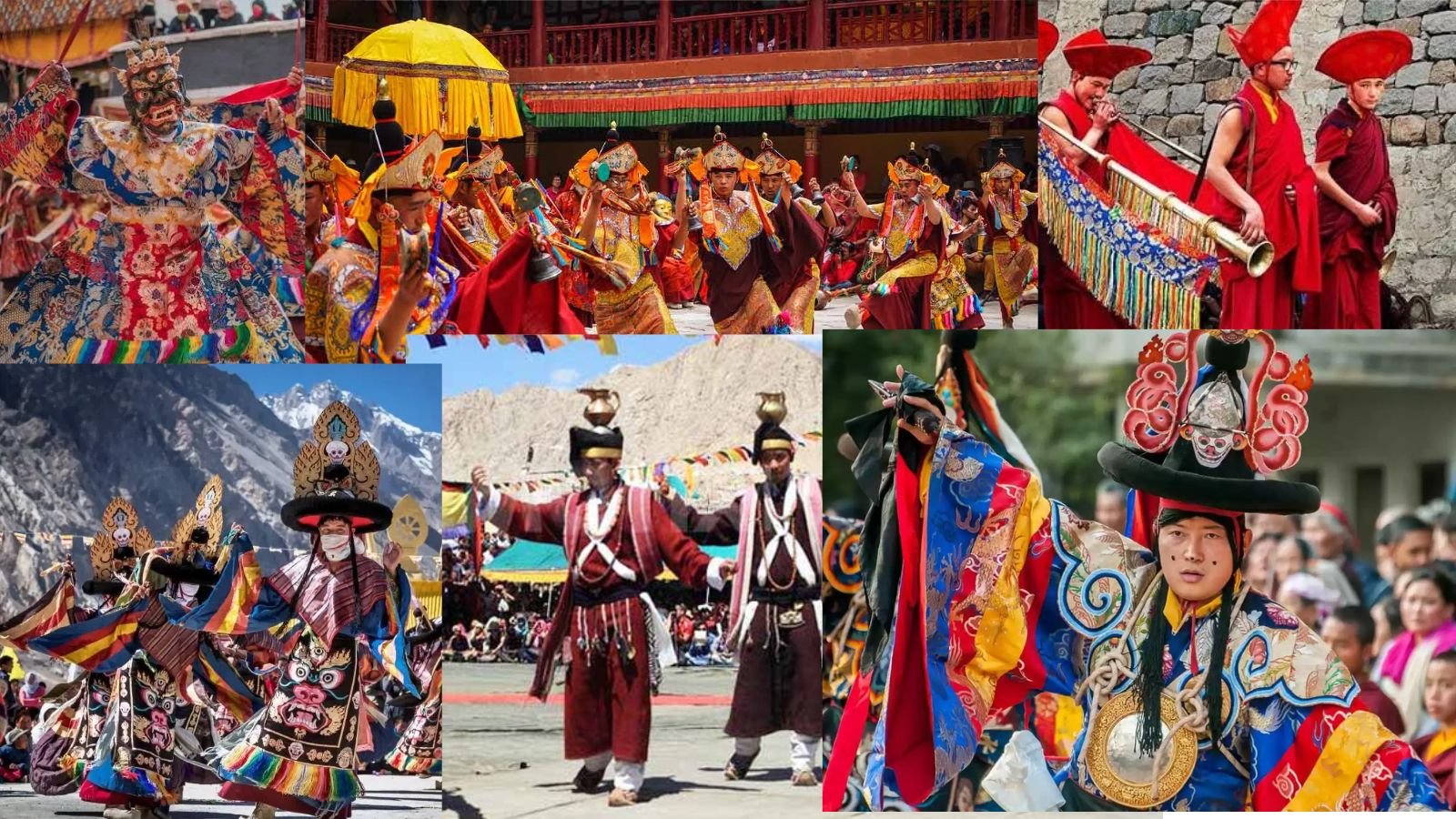
| Hemis Tsechu | June–July | Hemis Monastery | Two days of masked dances honouring Guru Padmasambhava. The biggest draw for visitors. |
| Korzok Gustor | July | Korzok, Tso Moriri | Mask dances beside a high-altitude lake, with smaller crowds than Hemis. |
| Ladakh Festival | September | Leh | A parade, polo, archery, folk music and dance, staged with visitors in mind. |
| Thiksey Gustor | October–November | Thiksey Monastery | Cham dances as winter closes in. |
| Losar | December | Across Ladakh | The Ladakhi New Year: family feasts, prayers and house visits. |
Hemis Tsechu: the one most visitors want
Held at Hemis Monastery, roughly 45 km from Leh, Hemis Tsechu marks the birth anniversary of Guru Padmasambhava. Lamas in heavy silk costumes and painted masks perform cham dances in the courtyard to the sound of drums and long horns. A giant sacred scroll painting (thangka) is unfurled only once every 12 years, most recently in 2016.
Arrive early for a spot on the courtyard edge, and carry sun protection. The courtyard has little shade, but mornings are cold. Hemis falls in peak season, so hotels in Leh fill quickly. Book early if you want it.
The Ladakh Festival in September
Organised by the local tourism department, the Ladakh Festival opens with a street parade in Leh where villages walk in traditional dress. Expect polo and archery matches, folk music and craft stalls over several days. It is more of a showcase than a religious event, and it lands in a pleasant part of the season: clear skies, cooler nights and fewer crowds than July. It suits first-timers well.
Losar and the winter festivals
Few tourists see Ladakh in winter, and that is exactly the appeal for some. Losar, the Ladakhi New Year, falls in December in most years and is celebrated at home with family meals and visits. Spituk Gustor and Dosmoche follow in January and February. Temperatures drop well below zero, many hotels close, and the high passes are shut, so Ladakh in winter suits experienced cold-weather travellers who are happy to stay around Leh.
Best Time to Visit Leh Ladakh If Festivals Matter to You
Timing is where people get tripped up. The months with the best roads are not the same as the months with the most festivals. This table lines them up.
| Season | Months | Weather and roads | Festivals you can catch |
|---|---|---|---|
| Late spring | May–mid June | Cold nights. Highways begin opening, though some passes may still carry snow. | Sindhu Darshan (June) |
| Peak summer | Late June–August | Warm days, roads open, busiest and most expensive months. | Hemis Tsechu, Korzok Gustor |
| Early autumn | September | Clear skies, cooler nights, thinner crowds. | Ladakh Festival |
| Late autumn | October–November | Cold. Many hotels wind down by mid-November and early snow can close passes. | Thiksey Gustor |
| Winter | December–March | Extremely cold. High passes closed, and Leh is reached mainly by air. | Losar, Spituk Gustor, Dosmoche |
For most first-time visitors, late June to mid-September gives the best balance: open highways, the full circuit of Nubra and Pangong, and at least one major festival. That is the same season our team recommends when guests ask about the best time to visit Leh Ladakh.
EXPERT TIP
Arrive between 6 and 7 pm to get a riverside table before the evening crowd. Carry some cash too. Most cafes accept UPI, but mobile data in the valley can drop without warning.
Monastery Etiquette: What to Do and What to Skip
Monks and locals are generally relaxed with visitors, but a few habits matter a lot. These are the ones we brief every guest on.
- Dress modestly. Cover shoulders and knees. It will be cold anyway, and people often ask what to wear in a monastery.
- Remove shoes, and usually hats, before entering a prayer hall.
- Walk clockwise around stupas, mani walls and prayer wheels.
- Ask before taking photos of monks, locals or inside prayer halls. Some gompas limit indoor photography or charge a small camera fee.
- Keep your voice low and your phone on silent during prayers.
- Do not touch murals, statues or ritual objects, and avoid pointing your feet toward the altar.
- Stay behind the rope at festivals. The dance courtyard is a ritual space, not a stage.
- Carry small cash for donations and a bottle of water for yourself.
How to Fit a Festival into Your Leh Ladakh Trip
A festival works best as one fixed point inside a normal itinerary, not the reason to squeeze everything into too few days. Most of our packages include a private vehicle with an experienced driver, hotel stays with breakfast and dinner, and the sightseeing in the itinerary, so you can focus on the day itself.
If you have 5 to 7 days
Our Leh Ladakh tour package for 6 nights and 7 days spends 02 nights in Leh, Nubra, 01 night in Pangong, 01 night in Tso Moriri 01 Nights, and 01 night in a hotel, which gives your body time to adjust and leaves room for a festival day without rushing the lakes.
Conclusion
Ladakh rewards people who show up curious. A festival turns the trip from sightseeing into something you will remember, and a little etiquette earns you real warmth from the people you meet. Pick your season with both roads and festivals in mind, give yourself time to adjust to the altitude, and leave a day or two free for the unplanned moments. If you tell us your dates, we will help you work out the rest.
PLANNING AROUND A FESTIVAL?
Tell us your travel month and we will check it against the festival calendar before suggesting a route. Browse our Leh Ladakh tour packages or send us a quick enquiry. We reply with options, not a sales script.
Frequently Asked Questions
Which is the most famous festival in Ladakh?
Hemis Tsechu is the best known. It is held at Hemis Monastery in June or July and features two days of masked cham dances. The Ladakh Festival in September and Losar in December are the other two most visitors hear about.
What are the Hemis festival dates?
There is no fixed date, because Hemis Tsechu follows the Tibetan lunar calendar. It usually falls in late June or July. Check the official Ladakh tourism listing close to your travel year, and we confirm the date with the monastery before finalising any booking.
Can tourists attend monastery festivals in Ladakh?
Yes. Most are open to visitors, who watch from the edges of the courtyard. Some monasteries charge a small entry fee. Follow the staff’s directions, stay behind the ropes and ask before photographing people.
Is the Ladakh Festival held every year in September?
It is normally held in September, organised by the local tourism department. The exact days and programme can change from year to year, so check before you book flights.
Can I visit Ladakh in winter for Losar?
You can, and Leh airport operates year-round. But it is very cold, many hotels are closed and high passes are shut. It suits experienced cold-weather travellers. Talk to us first so we can arrange a stay with proper heating.
What should I wear to a monastery festival?
Wear warm layers, a hat, sunglasses and sunscreen, since mornings are cold and the courtyard is sunny. Cover your shoulders and knees, and wear shoes that are easy to take off.
Kasol Nightlife & Culture – Israeli Cafes, Live Music and the Parvati Valley Vibe
Quick Answer Kasol nightlife is relaxed, not wild: live acoustic sets, open-mic nights, bonfires and Israeli cafes, with most places closing by 10:30–11 pm. There

Manali Sightseeing – Rohtang Pass, Atal Tunnel, Solang and Shinku La Compared
Quick Answer Pick Solang Valley for easy adventure and snow (about 14 km from Manali, no permit), the Atal Tunnel for Lahaul scenery and a
Best Honeymoon Places in Himachal Pradesh: 10 Romantic Spots Worth the Trip
Quick Answer The best honeymoon places in Himachal Pradesh are Manali, Shimla, Dalhousie, Dharamshala, Kasol, Naggar, Khajjiar, Chail, Palampur and Spiti Valley. Manali suits most
