
Quick Answer
Himachal is not one destination. It is four separate circuits that do not connect neatly, and choosing the wrong combination is how people end up spending a holiday in a car.
Pick one circuit for a trip of four to six days, two circuits for seven to eight days, and keep the high-altitude Spiti–Kinnaur loop for ten days or more. The best months overall are mid-September to November; March to June is peak season; July to mid-September is monsoon and best avoided in the Kullu Valley.
Most Himachal planning goes wrong at the first step. People make a list of places they have seen online — Shimla, Manali, Dharamshala, Khajjiar, maybe Spiti — and try to fit them into six days. On a map it looks reasonable. On the ground it means eight hours of mountain driving every second day.
This guide answers the questions we are actually asked, in the order they matter: how to structure the trip, when to go, how long you need, where to go, and what you are really buying when you book a package.
What is the best tour plan for Himachal Pradesh?
The single most useful thing to understand is that Himachal has four distinct circuits. Each one makes sense on its own. Combining them costs you a full travel day each time.
Circuit | Covers | Days needed | Open when |
| Shimla circuit | Shimla, Kufri, Chail, Naldehra, Narkanda, Solan, Kasauli | 3–4 | Year-round |
| Kullu–Manali circuit | Manali, Solang, Atal Tunnel, Naggar, Kasol, Parvati Valley | 4–5 | Year-round; passes seasonal |
| Kangra–Chamba circuit | Dharamshala, McLeod Ganj, Palampur, Bir, Dalhousie, Khajjiar, Chamba | 4–6 | Year-round |
| Tribal circuit | Kinnaur, Spiti, Lahaul, Chandratal | 8–10 minimum | Roughly June–October |
Circuits one and two connect naturally — Shimla to Manali is a recognised route, which is why Shimla Manali packages are the most-booked itinerary in the state. Circuit three sits on a different axis and is usually approached from Pathankot or via Mandi. Trying to run Manali and Dalhousie in the same week is where itineraries collapse.
One circuit per four to five days. If you have a week, take two adjacent ones. If you have ten days, you can attempt the Kinnaur–Spiti loop, which is the only genuinely demanding journey on this list.
How many days are enough for Himachal?
Four days is the practical minimum for one circuit, and that assumes you are not losing a full day getting there. Here is the short version:
| Days available | What fits comfortably |
| 3–4 days | One circuit only — Shimla, or Manali, or Dharamshala |
| 5–6 days | Shimla and Manali together, at a reasonable pace |
| 7–8 days | Two full circuits, or one circuit explored properly |
| 10+ days | Kinnaur and Spiti, or a wide Himachal loop |
We have written a much fuller breakdown of this in our comparison of five, seven and ten day itineraries, including what each length costs and what gets cut. If days are your main constraint, start there.
Which is the best time to visit Himachal?
Himachal genuinely works in every season, but not every season works for every place. The Department of Tourism markets the state as a destination for all seasons, and that is fair — provided you match the month to the region.
| Season | What it is good for | What to watch |
| March–June | Peak season. All hill stations open, snow at higher points | Crowds and traffic; book early |
| July–mid Sept | Green landscapes, low rates. Best window for Spiti and Lahaul | Landslide risk in the Kullu–Mandi corridor |
| Mid Sept–Nov | The best overall window. Clear skies, thin crowds, apple harvest | Nights get cold from late October |
| Dec–Feb | Snow in Shimla, Manali, Narkanda, Dalhousie | High passes closed; occasional roadblocks |
If snow is the reason you are going, read our winter snowfall guide before fixing dates — January is historically the heaviest month, but heavy snow and open roads are not the same thing.
Monsoon deserves a straight answer. The Mandi–Kullu highway is landslide-prone and closures happen with little notice. We still run trips in July and August, but we route them differently and we say so upfront. Our note on road conditions and safety explains how.
What are 10 must-see places in Himachal Pradesh?
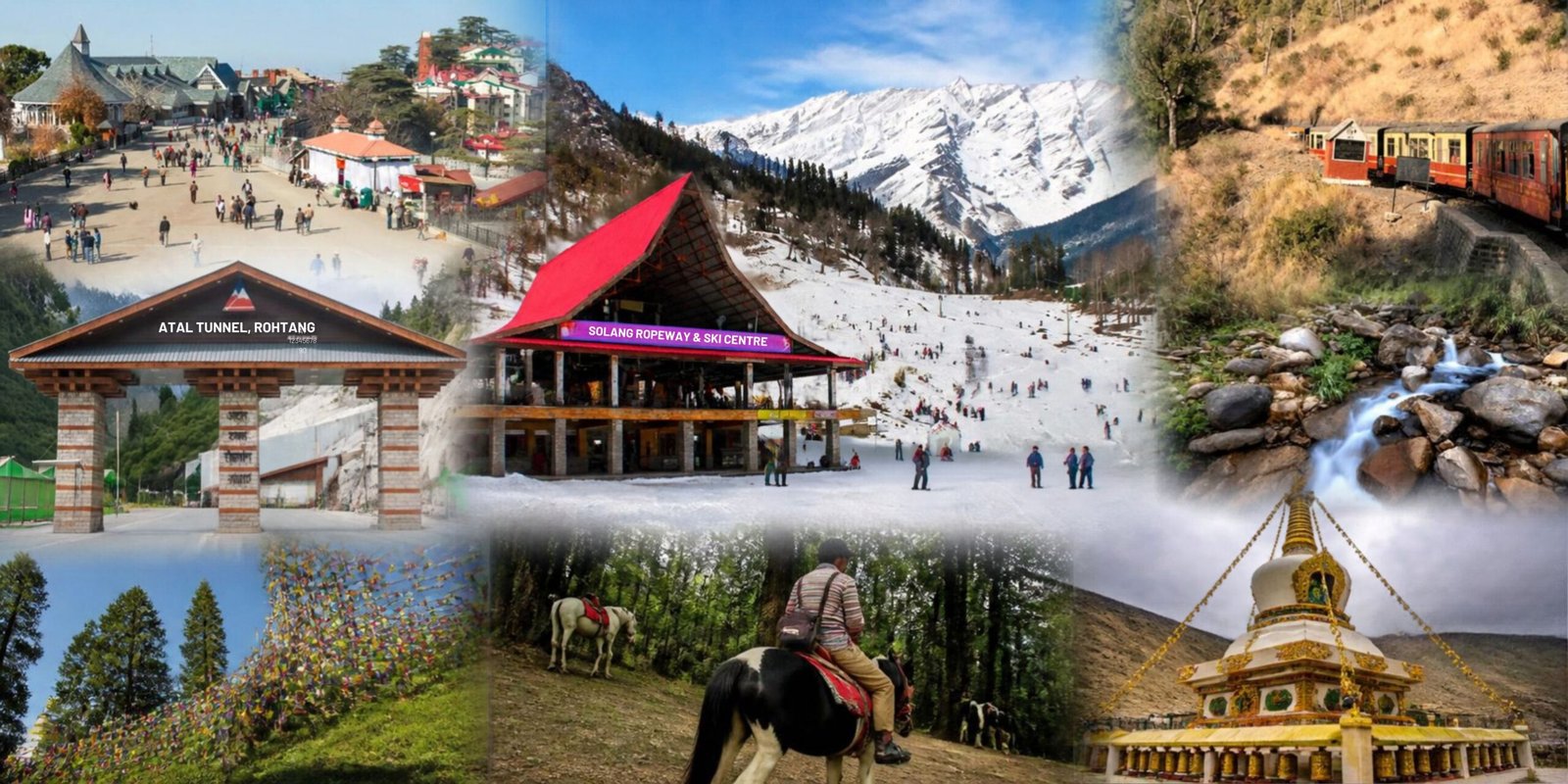
Ranked roughly by how easily they fit into a normal itinerary, not by fame.
1. Shimla Ridge and the Kalka–Shimla railway. The narrow-gauge line is part of the Mountain Railways of India UNESCO World Heritage listing. Ride a section of it rather than the whole route.
2. Solang Valley and Manali. The default first Himachal trip, and deservedly so.
3. Atal Tunnel and Sissu. A 9 km tunnel puts Lahaul within a day trip of Manali. Genuinely transformative.
4. McLeod Ganj. The Dalai Lama’s temple complex, Namgyal Monastery and the Triund trail.
5. Khajjiar and Dalhousie. The meadow deserves its reputation; give it a morning, not a whole day.
6. Bir Billing. One of the world’s best paragliding sites, with a slow-travel village below it.
7. Spiti Valley. Key Monastery, Chandratal, Tabo. A different country altogether — and a Spiti trip needs proper acclimatisation time.
8. Kalpa and Kinnaur. The Kinner Kailash range at sunrise is the best view in the state.
9. Great Himalayan National Park. A UNESCO World Heritage site inscribed in 2014, covering 90,540 hectares of alpine meadow and forest. Trekking routes here are closely regulated.
10. Parvati Valley. Kasol, Manikaran and Tosh. Popular with younger travellers; see our Kasol packages.
Kasauli or Dalhousie — which is better?
This comparison comes up constantly, and the honest answer is that these two are not really alternatives. They solve different problems.
| Kasauli | Dalhousie | |
| From Chandigarh | 65 km, about 1 hr 45 min | 325 km, about 7 hours |
| Size | Small cantonment town | Full hill station plus Khajjiar and Chamba |
| Ideal stay | 1–2 nights | 3 nights minimum |
| Snow | Light and unreliable | Reliable December to February |
| Best for | A short break, couples, quiet walks | A proper hill holiday with sightseeing |
The verdict: if you have two days and live in Chandigarh or Delhi, Kasauli wins easily — you cannot reach Dalhousie and back in that time. If you have four days or more and want an actual holiday rather than a break, Dalhousie offers far more, and Khajjiar and Chamba come with it.
A more useful comparison for most people is Dalhousie against Dharamshala, which sit on the same circuit and genuinely compete. Dharamshala has better food, more culture and easier access; Dalhousie is quieter and more traditionally scenic.
What is a full package tour, and what does it actually include?
A full package tour is a single quoted price that bundles transport, accommodation, specified meals, sightseeing transfers and coordination into one booking, instead of you arranging each element separately.
That sounds simple. The confusion is always about the boundary, so here it is plainly.
| Usually included | Usually not included |
| Vehicle, driver, fuel, tolls and parking | Lunches, unless specified |
| Driver allowance and night charges | Monument and attraction entry tickets |
| Hotels for every night listed | Ropeway, paragliding, skiing, rafting |
| Breakfast and dinner on a MAP plan | Rohtang permit and any adventure activity fees |
| All transfers on the listed sightseeing days | Personal expenses, tips, anything marked “at own cost” |
The line to read carefully: “sightseeing included” almost always means the vehicle takes you there. It rarely means tickets are paid. Ask which it is before you book, with anyone, including us.
If you want the full breakdown of what moves a Himachal quote up or down — hotel category, room plan, vehicle type, season — our package price guide covers it line by line.


Best Honeymoon Places in Himachal Pradesh: 10 Romantic Spots Worth the Trip
Quick Answer The best honeymoon places in Himachal Pradesh are Manali, Shimla, Dalhousie, Dharamshala, Kasol, Naggar, Khajjiar, Chail, Palampur and Spiti Valley. Manali suits most
Rohtang Pass or Atal Tunnel – What Your Shimla Manali Package Actually Includes
Quick Answer Rohtang Pass and the Atal Tunnel are two different places and two different days out. Rohtang sits at 3,978 m, needs a Rs
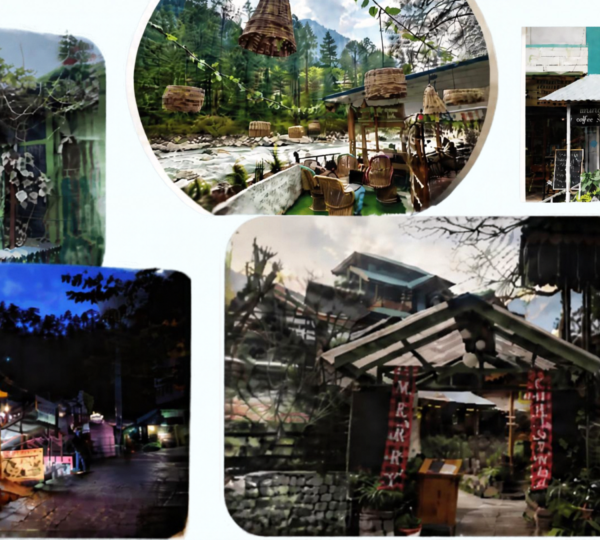
Hidden Cafes and Local Hangouts – Where Locals Actually Go in Manali & Kasol
Quick Answer Old Manali and Kasol are full of cafes built for Instagram, but the ones locals actually return to are quieter and often unmarked