
Quick Answer
Leh sits at 3,500m and several popular spots (Khardung La, Chang La, Tso Moriri) go above 4,300–5,360m, so altitude sickness is a real risk for first-time travellers. The single biggest prevention rule: spend a full acclimatization day in Leh before going higher, hydrate constantly, and avoid alcohol for the first 48 hours. The best time to visit is May to September when the Manali-Leh and Srinagar-Leh highways are open and weather is stable. Indian travellers need an Inner Line Permit (ILP) for Nubra, Pangong, and Tso Moriri, applied for online at lahdclehpermit.in.
Why Altitude Sickness Matters More in Ladakh Than Almost Anywhere Else in India
Ladakh is unlike any other Indian hill destination because you don’t gradually climb into the mountains — you arrive at altitude almost immediately, especially if you fly into Leh. Leh town itself sits at roughly 3,500 metres, which is already high enough to trigger Acute Mountain Sickness (AMS) in unacclimatized travelers. From there, most itineraries push higher: Khardung La at around 5,359m, Chang La at 5,360m, and Tso Moriri at about 4,522m. This isn’t a place where you can “push through” a headache and carry on — ignoring early AMS symptoms is how mild cases turn into medical emergencies.
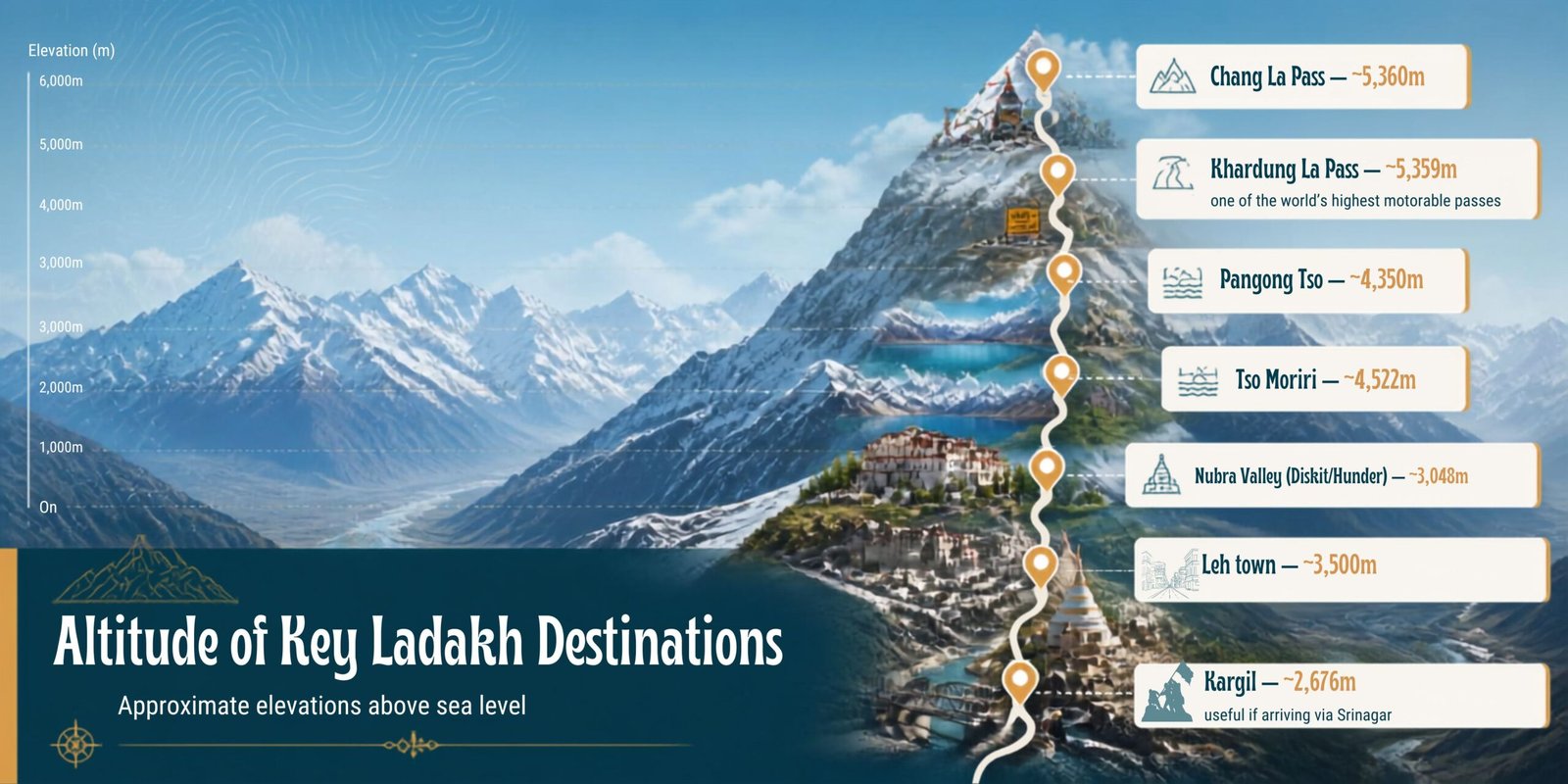
Altitude of Key Ladakh Destinations
- Leh town: ~3,500m
- Nubra Valley (Diskit/Hunder): ~3,048m
- Khardung La Pass: ~5,359m (one of the world’s highest motorable passes)
- Pangong Tso: ~4,350m
- Chang La Pass: ~5,360m
- Tso Moriri: ~4,522m
- Kargil: ~2,676m (noticeably lower, useful if arriving via Srinagar)
The jump from sea level (or even Delhi’s ~200m) to Leh’s 3,500m in a single flight is exactly the scenario doctors warn about most.
Recognizing Altitude Sickness – What to Watch For
Mild AMS symptoms usually appear within 6-12 hours of arrival and include headache, nausea, dizziness, fatigue, and disturbed sleep. These are common and often manageable with rest and hydration. Warning signs that need immediate medical attention include difficulty breathing at rest, confusion, a persistent cough, or inability to walk in a straight line — these can indicate High Altitude Pulmonary Edema (HAPE) or High Altitude Cerebral Edema (HACE), both of which require immediate descent and medical care.
Prevention Tips That Actually Work
- Rest for a full day in Leh before any sightseeing. This is non-negotiable, even for a short trip. Most serious AMS cases happen because travelers push straight to Khardung La or Pangong on day one.
- Hydrate aggressively. Aim for 3-4 litres of water a day; dry mountain air dehydrates you faster than expected, worsening AMS symptoms.
- Avoid alcohol and smoking for the first 48 hours. Both reduce blood oxygen efficiency exactly when your body needs it most.
- Eat light, carbohydrate-rich meals rather than heavy, oily food in the first day or two.
- Ascend gradually where possible. Break the Manali-Leh drive into stages (Manali–Jispa/Sarchu–Leh) rather than one exhausting push.
- Carry Diamox (acetazolamide) after consulting a doctor before your trip. Many travelers start a low dose a day before reaching altitude; this is a medical decision, so check with your physician first.
- Know when to descend. If symptoms worsen despite rest, moving to lower altitude is the most effective treatment.
Weather and Forecast – What to Expect
Ladakh’s weather is dramatically different from the rest of Himachal or Kashmir because it’s a high-altitude cold desert. Days can be sunny and warm (15-25°C) while nights drop close to freezing even in June. Because mountain weather changes quickly, always check a live forecast a day or two before high-altitude legs like Khardung La or Pangong rather than relying on seasonal averages — the India Meteorological Department (mausam.imd.gov.in) and apps like Windy give more reliable pass-level forecasts than generic weather apps.
Best Time to Visit Ladakh
- May to September is the primary travel season, when the Manali-Leh and Srinagar-Leh highways are open and most guesthouses, campsites, and restaurants are running.
- June to August is peak season with the most stable weather and full road access to Nubra, Pangong, and Tso Moriri.
- September offers clearer skies and thinner crowds, though nights get noticeably colder.
- October to April, highways close due to snow, and Leh is accessible mainly by flight; suitable for experienced winter travelers only, not first-timers.
Routes to Ladakh: Which One Should You Take?
- By Air (Delhi-Leh): Fastest option, but the sudden altitude jump makes AMS risk highest. The extra Leh rest day becomes even more important.
- Manali-Leh Highway: A spectacular high-altitude road trip via Rohtang/Atal Tunnel, Baralacha La, and Sarchu, typically open June to early October. Naturally acclimatizes you better since altitude gain happens gradually over 2 days.
- Srinagar-Leh Highway: Via Zoji La and Kargil, generally opens slightly earlier and offers a gentler altitude gain, a good option if you’re worried about AMS.
Permits You’ll Need
Indian and foreign travelers both need an Inner Line Permit (ILP) to visit protected areas including Nubra Valley, Pangong Tso, and Tso Moriri (Hanle and the direct Pangong-to-Tso Moriri route via Chushul require an additional permit, obtainable only in person at the Leh DC office). ILPs are not required for Leh town itself or the main Manali-Leh/Srinagar-Leh highways.
- Apply online: the official portal is lahdclehpermit.in, run by the Leh Autonomous Hill Development Council (LAHDC).
- What you’ll need: a valid photo ID, your travel dates, and the specific protected areas you plan to visit.
- Carry printed copies. Remote checkposts like South Pullu and Karu often can’t verify digital permits, so print several physical copies before heading out.
- Apply a few days before your trip to avoid last-minute delays.
What to Carry for Ladakh
- Layered clothing (thermal base layers, fleece, a windproof/waterproof jacket) even in summer
- Sunscreen (SPF 50+), sunglasses, and lip balm — UV exposure is intense at altitude
- A basic first-aid kit including any AMS medication prescribed by your doctor
- A power bank, since electricity can be unreliable in remote areas like Pangong or Tso Moriri
- Cash in smaller denominations — ATMs are limited outside Leh town
- A refillable water bottle to support the hydration routine above
Solo Travel vs Group Travel in Ladakh
Solo travelers should stick to well-traveled routes (Leh-Nubra-Pangong) rather than very remote stretches alone, keep someone informed of their daily plan, and consider joining a shared taxi or small group for the Pangong/Tso Moriri legs, where fuel stations and network connectivity are sparse. Solo bikers especially should not attempt high passes alone without informing a local contact of their route.
Group travel is generally easier logistically — permits, fuel planning, and emergency support are simpler to manage with a driver or tour operator, and shared vehicle costs make it more affordable. For first-timers unfamiliar with high-altitude travel, an organized group or guided package meaningfully reduces the risk of AMS-related complications, since experienced local drivers know how to pace the itinerary.
Final Thoughts
Ladakh rewards travelers who respect its altitude rather than rush through it. A slower pace — one rest day in Leh, gradual ascents, steady hydration — is what actually protects your trip, not just your comfort. Combine that with the right permits sorted in advance and a route that matches your experience level, and Ladakh becomes one of the most rewarding trips in India rather than a risky one.
If you’d rather have the acclimatization schedule, permits, and route planning handled for you, Royal Rover Holiday’s Leh Ladakh tour packages are built with built-in rest days and experienced local drivers who know how to pace high-altitude travel safely.
Some Relevant Pages
- Leh Ladakh Packages — our full range of Ladakh tour packages
- Complete Leh-Ladakh Tour Package (10N/11D) — an itinerary length that allows proper acclimatization
- Leh Ladakh Tour Package (6N/7D) — a shorter option with built-in rest days
- Nubra and Pangong Lake Tour Package (4N/5D) — covers the two most-visited protected areas needing an ILP
- Tso Moriri Lake and Hanle Tour Package (6N/7D) — for the more remote, higher-altitude lakes
Relevant Blogs
- Best Time to Visit Ladakh: Weather, Climate & Peak Season – Complete Guide
- Leh Ladakh Tour Packages for Couple: The Most Romantic Experiences You Can’t Miss in 2026
Frequently Asked Questions
How many days should I spend acclimatizing in Leh before sightseeing?
At least one full rest day is recommended before any high-altitude sightseeing like Khardung La or Pangong Tso, even if you feel fine on arrival.
Do I need a permit to visit Pangong Tso or Nubra Valley?
Yes. Both Indian and foreign travelers need an Inner Line Permit, applied online at the official portal lahdclehpermit.in, since these are protected border areas.
What is the best time to visit Ladakh for a first-time trip?
June to September offers the most stable weather and full road access to Nubra, Pangong, and Tso Moriri, making it the safest window for first-timers.
Is it better to fly into Leh or drive via Manali for altitude sickness prevention?
Driving via Manali or Srinagar allows more gradual altitude gain and is gentler on the body, though flying is faster — if you fly, plan extra rest days in Leh before going higher.

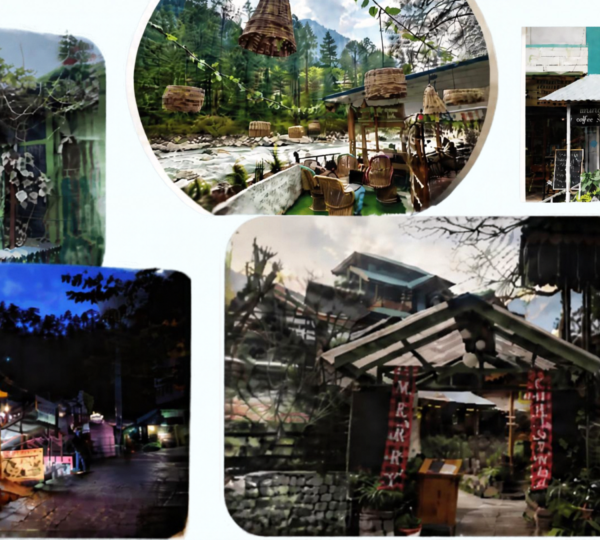
Hidden Cafes and Local Hangouts – Where Locals Actually Go in Manali & Kasol
Quick Answer Old Manali and Kasol are full of cafes built for Instagram, but the ones locals actually return to are quieter and often unmarked
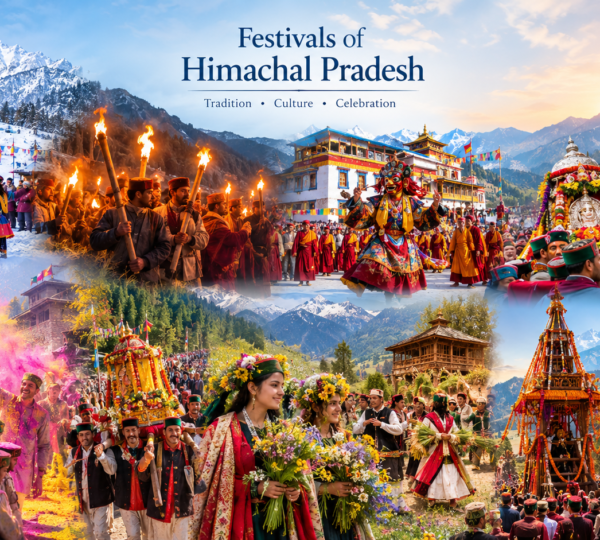
Local Festivals of Himachal Pradesh – When to Visit for a Cultural Experience
Quick Answer Himachal Pradesh’s festival calendar runs almost year-round, with the biggest cultural draws being Kullu Dussehra (October), Losar in Lahaul-Spiti (January-February), Mandi Shivratri (February),
Things to Do in Manali – Complete Guide to Sightseeing, Adventure & Nightlife
Quick Answer Manali offers a mix of easy sightseeing (Hidimba Temple, Old Manali, Solang Valley), high-altitude adventure (Rohtang Pass, Atal Tunnel, paragliding, river rafting), and